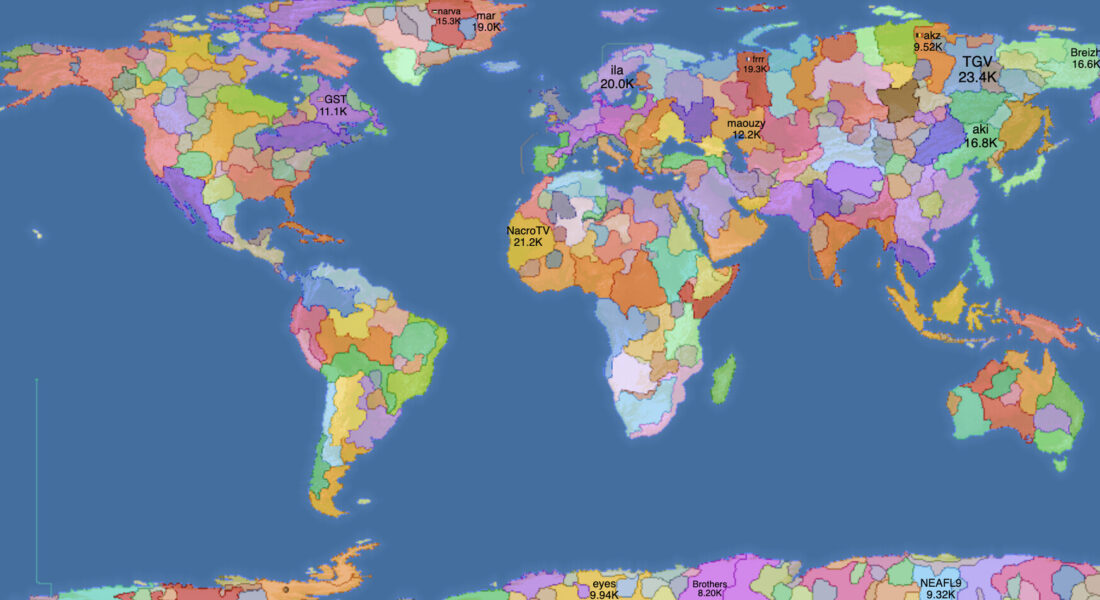
OpenFront Game – Lost an Entire Evening
I’ll admit it – I wasn’t looking for a new strategy game when I found OpenFront. I was just browsing around, looking for something different to play. Usually, when I try browser games, I expect a quick experience. Something I can play for a few minutes, enjoy, and then forget about.
That was my plan with OpenFront. It didn’t exactly work out that way. The first thing that caught my attention was how easy it was to understand. I didn’t need to spend twenty minutes reading instructions or watching beginner guides before I could start playing. The idea was simple: build your territory, manage your resources, expand your influence, and try to outsmart other players.
Sounds easy, right? Well, not exactly. The funny thing about strategy games is that the basic idea is often the easiest part. The real challenge comes from making good decisions when everything starts happening at once. And OpenFront definitely has those moments.
 My first match was basically a collection of bad choices. I expanded too quickly, ignored what other players were doing, and assumed that having more territory automatically meant I was ahead.
Spoiler alert: I was not.
I had created a bigger target for everyone else.
Within a short time, I found myself surrounded by opponents who had clearly been thinking more carefully than I was. They weren’t rushing everywhere. They were building their position, waiting, and choosing the right moments to act.
Meanwhile, I was basically waving a giant flag saying, “Please attack me.”
It was not my best strategic performance.
But honestly, that first failure was what made me want to play again.
I like games where losing teaches you something. There is nothing worse than losing a match and having no idea why it happened. With OpenFront, my mistakes were pretty obvious. I could look back and understand exactly where I went wrong.
I didn’t plan ahead.
I didn’t watch the map carefully enough.
I treated every opportunity like something I had to take immediately.
Once I started changing those habits, the game became much more interesting.
That’s when I realized OpenFront is not really about who can grow the fastest. It’s about who can make better decisions over time. Sometimes the smartest move is not attacking. Sometimes the best choice is waiting, saving resources, or letting another player weaken themselves.
That was a surprisingly difficult lesson for me.
I’m naturally an aggressive player. In most games, I want to move forward and take action. Sitting back and being patient feels strange.
But OpenFront rewards players who know when to slow down.
The more I played, the more I started noticing little details. I paid attention to where other players were expanding. I watched for weak positions. I stopped throwing resources into random attacks and started thinking about whether each move actually helped me.
Basically, I stopped playing like I was clicking buttons and started playing like I was making plans.
That change made a huge difference.
One of my favorite things about OpenFront is that every match feels different because of the people you are playing against. The map might be the same, but the players completely change the experience.
Sometimes you get an aggressive opponent who attacks immediately.
Sometimes you meet someone who quietly builds power and suddenly becomes the biggest threat on the map.
Sometimes two players are fighting so intensely that you can take advantage of the situation without firing a single shot.
Those moments create the kind of stories that make strategy games memorable.
I also think OpenFront does a good job of being accessible to new players. Strategy games can sometimes feel intimidating because they come with huge lists of mechanics and complicated systems. Here, you can understand the basics quickly and improve naturally through experience.
Of course, experienced players will have an advantage.
They know the maps better.
They understand timing.
They recognize mistakes before newer players even notice them.
But that is part of the fun.
Every match feels like practice.
You are not just trying to win. You are learning how to become better.
The visual design also works well for the type of game OpenFront wants to be. Strategy games need clear information more than impressive graphics. You need to quickly understand where you are, what you control, and what your opponents are doing.
OpenFront keeps that information easy to follow.
I never felt overwhelmed by unnecessary effects or distractions. The focus stays where it should be – on the decisions you make.
If I had one thing I would like to see improved, it would be adding even more variety for long-term players. More maps, additional strategic options, or new ways to approach matches would make an already enjoyable experience even stronger.
However, I don’t think the game needs to become complicated just for the sake of adding features.
Sometimes games become worse when developers add too much.
OpenFront works because the core idea is strong.
Build.
Expand.
Adapt.
Survive.
That simple formula creates a lot of interesting situations.
Would I recommend OpenFront?
Definitely.
If you are completely new to strategy games, it is a great place to start because you can learn without feeling overwhelmed. If you already enjoy games about territory control and planning, you will probably appreciate the extra layers that appear once you start playing seriously.
The biggest compliment I can give OpenFront is that it made me care about my decisions.
I wasn’t just clicking around waiting for something exciting to happen.
I was thinking.
I was planning.
I was trying to figure out what everyone else was doing.
And suddenly, that “five-minute test” turned into a full evening of trying different strategies and saying, “Okay, one more match.”
I have a feeling many players will have the same experience.
Comments are Closed